Tuesday, 1 November 2011

Jewels: Past

Jewels and Gemstones

The interest in gold most likely began in the Stone age, and this began the popularity of jewellery. This is significant because gemstones probably would not have become as popular as they are today without gold - because they are usually set in precious metals like gold. It took until the bronze age to mine silver and copper, and so this was also used as a base for precious stones. (Jewelery Mae 2003)

Bronze Age Jewellery from Budapest (Kalicz-Schreiber Rózsa 1995)

The Ancient Egyptians used lapis lazuli, carnelian, jasper, amethyst and turquoise for their jewellery - with amethyst and turquoise still being widely used today in the process of jewellery making.

Lapis Lazuli Egyptian Jewellery (Faba Jewellery)


This shows that gold has always been popular since its discovery. Gold has not really changed over the years (however, it may have gotten less pure) and so the same thing that became popular in the Stone Age is still popular to this day. The same can be said for the gemstones used in Ancient Egypt, as they are still being used in jewellery in the present day.

During the Renaissance people wore gold pendants, gold chains and jewelled collars. When the factory production of jewellery began, it saw a decline in artists creating unique pieces, but it introduced costume jewellery which was cheap and affordable to the public. (Jewelery Mae 2003)

A Renaissance Woman wearing a pendant and chain belt (allaboutgemstones.com 2010)

Gemstones in history were also used to create stamps, carved dies and seals. These were often used to seal documents and were used by officials.

Carnelian Sealing Stone Circa 224 to 651 AD (Prentice Lee  2010) 

This method however, is not really all that relevant for my research. With the advances in technology in this modern day, we do not really use stones to seal documents anymore, and cheaper ways of creating them were introduced anyway. This makes this topic not really all that relevant to my research.

Diamonds

The first recorded diamonds in history were 3000 years ago in India. These diamonds obtained their value for their ability to refract light (see image in Jewels: Present).

Antique Diamond Ring (theweddingblog 2011)

This is relevant to my research because it most likely began the popularity of diamonds, because they are valued for the way they ‘sparkle’ – which is directly tied by the way they refract light once they are cut.

An interesting fact is that diamonds were used to ward off illness during the Dark Ages, and were held whilst performing medical operations – obviously superstition like this has now been disproved and modern medicine has prevailed, so it is not a significant point for my research. (Costellos 2010)
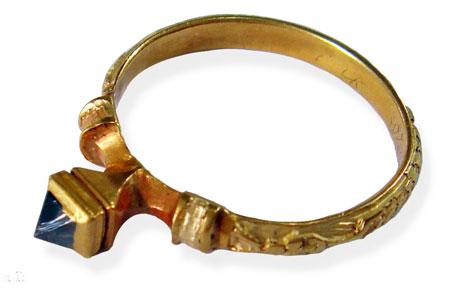
Diamond Ring dating back to medieval times (BNPS  2008) Taken from Telegraph article 'Treasure Hunter Finds Medieval Diamond Ring'

The popularity of diamonds increased in the middle ages, with large diamonds like the Koh-I-Nor and the Blue Hope being discovered and cut. After this a few countries discovered that they had diamond deposits, and so began a diamond rush to keep up with the ever increasing popularity of the stone. (Samantha Smith, BBC, 2011)

Koh I Noor Diamond (Chris72 2007)
Blue Hope Diamond (Smithsonian Science 2009)

From looking at diamonds in history, the popularity has just grown and grown. In my opinion diamonds will always be a viable subject for my research, and in turn making jewels a viable topic. This has proved that throughout history, people have liked diamonds and this still continues today – I am predicting that this topic will become more relevant for the horizon section because if the popularity is growing, then the future is looking good for diamonds.

Cameos

It is said that Queen Elisabeth loved to wear cameos, and that Catherine the Great had a vast collection of them. Queen Victoria also wore cameos on occasion, and this led to them being very popular in the Victorian Era. In this Era, shell was the most commonly used material to make the cameos, but some were still made out of stones such as sardonyx, agate and onyx. (Victorian Bazaar 2000)

Brooch featuring a cameo of Queen Victoria  (18Karat Goldsmiths 2009)

It is since this time that shells became popular materials and that women’s profiles were widely carved on the cameos themselves. Previously they had been used to depict a wide variety of pictures.


This is a video to show an antique cameo that was for sale on eBay. This subject was very popular in the past, and the antiques born out of this popularity are still being sold today.

It looks as though the Victorian Era was the main catalyst in improving the popularity of cameos. It created the modern ‘idea’ of what a typical cameo should look like, and these ideas continue today.

Cameos have not always been decorative objects for women. Earlier than the Victorian Era, people used cameos to depict an ethic or moral, or to make a statement about faith and loyalties. In early Greek and Roman times cameos were used to show scenes of mythology and the Gods and Goddesses. In some cultures, men also wore cameos to show their prestige and high status. (Anna Miller 1998)

A portrait of Emperor Augustus - one of the most famous surviving cameos of this time (18Karat Goldsmiths 2009)
"This Antique cameo depicts Aurora, the Greek goddess of the dawn as she leads the sun god Apollo on his chariot at break-o-day, bringing-in daylight to the world" (WH Starkhouse 2011)

From this research it seems that cameos themselves come and go in popularity. They are always around, and benefit from an ongoing popularity throughout the ages, but their massive popularity does come and go with the decades. I think that this research is relevant because they are still popular today, in more or less the same state they were in all those years ago.

Ice

Upon reflection, using ice as a theme was possibly not the best idea. It may have inspired several things, but as a subject itself it does not seem very popular.

In history, ice would have been used to keep food cold before refrigeration techniques were invented. It was also a luxury in the 1800’s, a man named Frederick Tudor invented the ice cube, which finally allowed people to quickly cool down their drinks, which was previously unheard of. (Linda Rodriguez, CNN article, 2008)

People cutting Ice in China - this has been done for thousands of years to preserve food and keep things cold. (Lloyd Alter 2007)

Obviously the biggest association with ice in history would have been the Ice Age, which happened approximately 20000 years ago. This in itself is not really valid for my research, but it has spawned some successful popular media, such as the film Ice Age.

Ice Age [DVD] [2002]


My research has shown that the popularity of ice as a theme in a history sense is not really applicable to the overall goal of my research so I will not look into the history of it. It may have a bigger popularity on the horizon though, because the popularity I have found so far has been greater in the present day. This might show that the popularity is growing over time, especially with the big issue about climate change and melting ice currently in the media.

Treasure

When thinking about treasure, the first historical thing that springs to mind is the buried treasure in the Egyptian tombs in Egypt. The tomb of Tutankhamun was discovered in 1922 and it contained many priceless treasures richly decorated in gold and precious jewels. These treasures were though to have been needed but the king in his afterlife, and so they were buried with him when he died. (Robert Partridge 2011)


The antechamber of the Tutankhamun, as first seen by treasure hunters in 1922 (Griffith Institute 2011)
The tomb of King Tutankhamun on Egypt (PlanetWare Inc 2007-2011)

Another idea that is associated with historical treasure is the pirate’s buried treasure. Most of this is down to the novel ‘Treasure Island’ by Robert Louis Stephenson. In reality, pirates did not usually bury their treasure, choosing to spend it on women, drink and gambling instead. Captain Kidd was one of the most famous pirates to horde buried treasure, he once robbed a ship and stole between 20,000 to 40,000 rupees. Fearing arrest he buried this on Gardiners Island under the protection of John Gardiner, much of which was discovered by treasure hunters after Kidd’s arrest. (Cindy Vallar 2000/2011)

Treasure Island - Robert Louis Stephenson,1883 (Templar Publishing 2005)

'Wholesale robbery by pirates on Lake Michigan' - A news article from the New York Times (New York Times October 1885)

Treasure hunting itself seems no longer popular, and the interest in in in a historical sense is only slight. In the days of pirates, people would have probably read about it in the news but not actively engaged in the activity. When the tombs in Egypt were found, then the popularity did increase to a fever pitch, but only for a limited amount of time. You can see this in popular media in films like Indiana Jones (1981). In the present day though, there is not much of a popularity – most people wander round with metal detectors now and are seen as slightly ‘odd’ to the general public. This may be because most of the treasure has already been found, but this is pure speculation.


Pearls

Pearls are the oldest known gems, and for many centuries it was considered the most valuable. The oldest known pearl jewellery was found in the sarcophagus of a Persian Princess dating back to 520BC. (Pearl Oasis 2011)

Roman Bracelet made from Pearls in the British Museum - This is a replica for sale today, made from a direct mould of the original antique Roman jewellery (Quirao 2006 - 2010)

In Roman times strings of pearls were prized and very valuable, only people of a certain rank were allowed to wear them.

An antique 'Roman Pearls' receipt on sale on eBay - this shows the popularity of the subject because it shows that people were buying the products (Melmyster 2011)

Pearls have always been a popular choice – at weddings they can symbols of innocence and purity, and in medieval Europe they were sewn onto clothes as decorations.

A Painting of Queen Elizabeth from 1590, showing pearls sewn onto her dress and in her hair. (George Glower 1590, Suzanne Hill 2007)

This all shows that there has been a continual interest in pearls because they are still popular in the same form in the present day. My research suggests that they were the first jewels to be coveted, and so really theirs have had the longest run of popularity. The popularity of pearls most likely has dropped off over the years, but they have had a continual presence in shops and people still buy them – making them an ideal topic of study for the horizon because their popularity has been proven.

Japanese 'Ama' pearl diver - this has been going on for thousands of years to meet demand (James Disley 2005)

A video to show Japanese Pearl Divers, this was filmed in 1963. With the media available, this shows that this subject was popular in the past.

Another important point would be the historical art of pearl diving. The majority of pearls came from beds in the Persian Gulf, China and Japan. Before the 20th century the only way of collecting pearls was to dive down and collect them. Divers usually had to dive between 40 and 125 feet without any breathing apparatus. Back around this time the best pearls were believed to have come from the ‘Sulu Archipelago’ in the Philippines, and interesting fact about this was that the largest pearls, by law, belonged to the Sultan. Sellers of these pearls could potentially be put to death. (W. R Catelle 1457) (The Pearl Market LTD 2002 - 2011)

The islands of the Sulu Archipelago, where divers used to dive for pearls. (Farl 2008) 
Map showing the location of the Sulu Archipelago, near the Philippines (Lupah Sug)

Interestingly, these pearls from the Sulu Archipelago were so popular and coveted that people actually had to smuggle them out of these area because of the laws decreed by the sultan. However, these sis manage to end up in the possession of some of the wealthiest families in Europe. This method of pearl gathering may have been popular before the 20th century, but it is now obsolete so it is not relevant to my research. However, it does prove that pearls have continued to be popular no matter what time period it is.

Conclusion

In conclusion to the research of 'Jewels' in the past, its looks as though the subject of pearls has been incredibly popular in the past. They were the first jewels to be coveted and valuable. This shows that the popularity has actually changed over the years, and in the present day they are still popular, but less so than in the past. I will have to look at this in my Horizon section to see if this popularity is still changing. The subject of ‘Ice’ is not as popular in the past as it is in the present, but this may be because of the information on climate change we have available now. This might be a very valid subject for the horizon, because most climate change will happen in the future. I think the subjects of cameos and treasure were more popular in history than they are now, and diamonds are definitely more popular because of the increased availability of them in the present day.

Theatre: Past

Theatre

English Renaissance theatre, or early modern English Theatre, is probably where the idea of modern day theatre began. This era was dominated by playwrights such as Christopher Marlowe and William Shakespeare – Whose plays are still popular to this day. (Willaim Shakespeare Info 2011) (Marlowe Society 2011)

Christopher Marlowe - A Popular Playwright (Corpus Chrisi College 1953) 
William Shakespeare - His plays are still popular to this day (Bate, J. 1997)

In my opinion, English Renaissance theatre is most relevant to my Present Day post. There is also still an interest in this in the present day and it looks as though much of today’s theatre has been inspired by this style of theatre. Even today Shakespeare’s plays are studied within schools, and are still said to be fantastic pieces of work. They are even still performed in theatres and have had many modern interpretations of them. This just shows that the popularity of this has grown over the years, into what we see it now in the present day.


Hamlet (The Arden Shakespeare, Third Series) (Shakespeare 1599/1601)


Hamlet (2009) A modern day adaptation - it is still popular to this day.


Previously theatre had been very rudimentary, with companies of players travelling around the country visiting noble households to perform, rather than performing in the theatre. These actually were the beginnings of the modern ‘idea’ of theatre, and in time these players settled to perform in one place and a law was passed in 1572 to label all companies without formal patronage ‘vagabonds’. “And all fencers, bear-wards, common players in interludes, and minstrels not belonging to any baron of this realm” (will be labelled a vagabond).

An Illustration of members of a travelling company in 1600 (Encyclopaedia Britannica 1994) 


This forced the travelling companies to settle down, and began the birth of modern day theatre as we know it.

This idea of ‘travelling companies’ is a very popular one; it has even inspired some popular books about them. They are very frequently added into historical fantasy books. Obviously this has now died out, especially with the laws put in place to stop it happening, but without these companies theatre today might not have existed as we know it.

During the 18th century, there was a very famous manager and playwright named David Garrick (1717 – 1779). He was one of the first people within the theatre world to adopt a more natural form of speaking and acting that was closer to real life than previously. This ultimately founded the movements of realism and naturalism. (Globe Theatre 2010)


Cinema

Very early cinema began in the 17th century where they used magic lanterns to make moving pictures. These often reached high levels of sophistication, and they projected images onto clouds of smoke whilst sound effects were made to go alongside it. (Jonathan Walters, Early Cinema Timeline, 2002)

A replica of a magic lantern for sale at £26.99 (Grand Illusions  Ltd 2011)

In 1839 Henry Fox Talbot discovered an important advancement in photography production, and invented the first paper negatives, and also around this time glass slides were made possible through using better technology to print them. Obviously as you get towards present day, the invention of plastic was very important for the world of cinema because negatives and slides can now be printed in mass, for a very cheap price. (John Barnes 1998)

A Calotype Paper Negative (Alan Green 2008)

With further advancements, cinema developed from a carnival novelty to one of the most important mediums for communications, entertainment and mass media in the present day.

Looking at my present day research it became apparent that there has been a ‘revival’ of antique cinema from the 1950’s onwards. It is currently talked about a great deal on the media – and especially talked about by people on social media websites, and actresses such as Audrey Hepburn are widely heralded as idols and fashion inspirations. This shows that the history of cinema is still actually popular today and films such as Breakfast at Tiffany’s are still very popular and sold in shops to this day.


The original trailer for Breakfast at Tiffany's - This is still popular now, but not as popular as it was in the past.


 After the 1950’s cinema became really big business, and film viewing theatres called ‘cinemas’ sprang up across Great Britain and America. This also sparked the beginnings of the current celebrity culture. (A Robinson 2003) With the advancement of mass media, and popular media, these actors and actresses started living in the public’s eye and because celebrities. Today though, there are many, many celebrities of varying fame, and it has moved on from early cinema. Media is available to everyone 24 hours every day, so people are very aware of current famous actors and actresses and show a massive interest in their lives. (IMDb 2011)

This is just showing that the cinema of the past has grown in popularity over the years and is still enjoyed today. It has also inspired many other more modern works. The cinema of old has revolutionised the way media is today, and it lets us see many different things. Cinema itself is incredibly popular with modern day films making millions of pounds – this would not really be possible if it did not have so much relevant history.

Makeup

In the late 1800’s, the only people to wear makeup really were stage performers and prostitutes. Compared to today’s standards – where nearly every woman wears makeup and it is widely available, before 1850 there was a very limited selection available to people who wanted to use it. (Amy Finley The History OF Theatre Makeup 2006-2011)

“Stage Makeup items available before 1850:
White face powder
India ink for drawing lines
Rouge (very bright red or pink)
Misc. artist’s pigment base powders, (like Bole Armenia aka “burnt umber” for a reddish brown tone)
Burnt cork (for dark brown/black)
Lamp-black (for mascara)
Burnt paper (for grey shadows)
Spirit gum
Wool crepe hair (for both facial hair and false noses)” Taken from the blog – Seduced by History, Paty Jager, Wednesday June24th, 2009

Complete and unused white female Max Factor theatrical "student" kit in original box  - 1940 (Tara Maginnis 2010)

Looking back over the research I have come to the conclusion that the subject of makeup is very relevant to the present day, and it has been a continued subject of interest over the years. The research also shows that attitudes towards makeup have changed, from it being the domain of actors and prostitutes – to now being worn by just about every woman. It has also sparked a huge grown in the cosmetics and beauty industry, just to illustrate how popular it has become.

How to 'Make Up' (Haresfoot and Rouge 1877)
This was a book for sale in 1877 as a guide for applying makeup for actors.

Much earlier than this, in the Greek and Roman times makeup was not really necessary. The actors wore masks, which allowed them to portray anything they wanted, such as expressions, gender, age, or something that looks entirely different to the actor. (Edward Argent 2011)

1st Century BC theatre mask (Jastrow 2005)

Rudimentary makeup techniques played with light and shadow on the actors faces to change the shape and appearance of the faces of the actors, and this pretty much changed the way makeup was applied, especially with the invention of electrical lighting which bathed the actors with light that they previously had no access to. (Patty Jager 2009)

Cover of a brochure for Theatrical Stage Lighting  (Kliegl Bros 1922)
Lighting had a massive effect on stage makeup, and people had to change the way they applied it. Such examples of the effects include; Pink makes cool colours grey, and makes yellow become orange, fire red ruins makeup, green greys all flesh tones, purple affects makeup like violet lighting and light blue lowers the intensity of base colours.

Puppetry

Puppetry is actually a very ancient form, being invented long before theatre as we know it today. It is believed to have originated 30,000 years BC and it has always been used as a storytelling medium. (Puppets Now 2000/2011)

I think that puppetry is very relevant to the way that present day media has developed. It means that there has been a rise in popularity in this subject, and many famous television shows have been made using puppets.


The introduction to 'The Sooty Show' This was a popular television show made with puppets.

One every interesting topic is the Chinese Shadow Theatre, which used puppets – originally called “pi-xing xi”, translated as “theatre of the lantern shadows”. It is believed to have been invented over 2000 years ago for Wu, the Emperor of the Han Dynasty, and was inspired by the shadows cast by the toys children were playing with. They were first made from paper, and later on, the hides of donkey and oxen. For a long time this type of puppetry was heavily tied into politics and very influential because it was universally understood – as there were no words, therefore no language barriers. (Travel China Guide 1998 - 2011)

Chinese Shadow Theatre (Théâtre des Ombres 1996)

The idea of the shadow puppets is really interesting – but over the years it didn’t really increase in popularity. In this present day and more recent history, there are not many examples of it within popular media, so it might not be fully relevant to my research.

Shadow puppetry has continued to be used in the near past, such as on Bear in the Big Blue House (1997), The Year of Living Dangerously (1983), Once Upon a Time in America (1984), and Karate Kid (2010) There is also a Centre for Puppetry Arts in Atlanta, Georgia, which has a collection of antique shadow puppets.

Once Upon a Time in America Dvd (1984)


Bear in the Big Blue House (Jim Henson 1997 - 2007)

More recently there have been several popular children’s TV shows, such as Sooty and Thunderbirds that have proved incredibly popular and these have both used puppets to create the programs.

The television shows such as Captain Scarlet and Thunderbirds have enjoyed enormous popularity, and even though they are now several years old, people still enjoy watching them. They were also shown many times in the media, and had toys, spin off shows and movies made about them. In a way these have paved the way for new techniques – but at the time they were very popular with people.

Marionettes

There is evidence that Marionettes were used in Egypt from as early as 2000BC because articulated, string controlled puppets have been found in tombs dating back to that time. Traditionally they were used to portray rituals and ceremonies of importance in ancient times. (Ma Theng / Nyan Tun 2005)

'Queen of the Night' from Mozart's 'The Magic Flute' (Under Creative Commons)
More recently than this, Italian Renaissance is considered by the majority of people to be the birthplace of Marionette theatre as we know it – mostly due to the influence of Roman puppetry. The Christian church used them to perform religious plays, and they were also used in villages and small towns to tell the people the news that had been going on in the cities – almost like a precursor to the news channels today that we have running 24 hours per day.

Re-enactment of an Italian Renaissance Marionette show at the Renaissance Festival (Randy McAtee)

From this research, marionette dolls in Renaissance Italy have inspired a great many things. They might not be popular in the present day – but in their time they were very popular and sometimes the only entertainment people had access too. I think that they possibly inspired the idea of broadcasting news and events to people – thus maybe being the original form of popular media.

It was thought about this time that Marionettes began to be used in the theatre, and even Shakespeare used them in some of his plays instead of actors.

In modern history, marionettes have been used in television and movies, such as Pinocchio (1940), Howdy Doody (1947), and Andy Pandy (1952). This does however show that marionette style theatre has been reduced to a children’s entertainment, giving it a more limited audience. This may show how entertainment has changed throughout the years.


A selection of scenes from Pinocchio (Disney 1940) Even though it is animated, it is still about a Marionette doll so it shows that there was some interest in the subject at the time.


This does however show that marionette style theatre has been reduced to a children’s entertainment, giving it a more limited audience. This may show how entertainment has changed throughout the years.

Conclusion

In conclusion to the research of 'Theatre' in the past, the subject of puppetry has previously been very popular with the public. There have been very popular television shows and films such as Pinocchio and Thunderbirds which were filmed using puppets, but that popularity hasn't continued into the present day. The more relevant research to my goal will most likely come from the actual 'Theatre' and 'Cinema' subjects. It has been proved that there has been popularity and an interest in these subjects in the past, and it has grown in the present day - so this might make a good basis to begin my research into the 'Horizon' of theatre. If the popularity of the subjects has increased between the past and present day, then it should surely continue in the future.

Tuesday, 4 October 2011

Jewels: Present

Dictionary Definition: Jewel

n
1.a. A precious stone: a gem
b. A small or natural artificial gem used as a bearing in a watch
2. A costly ornament of precious metal or gems
3. One that is treasured or esteemed
4. (Clothing, personal Arts and Crafts / Jewellery) A piece of jewellery
5. (Fine Arts and Visual Arts / Ceramics) An ornamental glass boss, sometimes faceted, used in stained glasswork.

vb
-els, -elling, -elled US, -els, -eling, -eled

(tr) to fit or decorate with a jewel or jewels


Modern Day Jewels

The subject of Jewels is a very diverse one with many different meanings. It may refer to Gemstones or Jewellery, films and books going by this name (which coincidentally links it to my other topic of research - Theatre), Jewel bearings used in sensitive measuring equipment, jewel case which is the case that CDs and DVDs are held in, Jewel Beetles, Jewel Butterflies and Jewel Damselflies to be some examples of the various meanings of the word. Of course, the most common use of the word is in the description of gemstones and jewellery. (Enchanted Learning 2010)


(Even though this CD is from 2002, it is still being sold on amazon.co.uk today, therefore making it viable for my present day research because there is still an interest in the media)


[Blu-ray] [2011]


Gemstones and Precious Stones

A gemstone is also called a semi-precious, or precious stone. It is a piece of mineral which is used to make jewellery and adornments once it has been cut and polished. There are other non-minerals that are also used for gemstones such as lapis lazuli, amber and jet, but considering that they are used for jewellery too they are also considered gemstones. The stones are very valuable, and the value increases with the rarity of the gem. Often in society it is a major status symbol to be adorned with the most expensive and rare gemstones because only the richest people can afford them. Poorer people may only own one bespoke piece of jewellery that they received at an important event in their lives, such as a marriage or landmark birthday. (Enchanted Learning 2010) (Victoria and Albert Museum 2010)


After looking at gemstones the subject of the way status coincides with the value of the gems interests me. The first thought that came to me was to study diamonds because they are the ultimate status symbol in today’s society. Rich people buy them in their hundreds, poorer people can only dream of getting a real diamond on an engagement ring. This is due to their scarcity and the trouble that 3rd world people go to mine them out of the ground in dangerous conditions.

Diamonds

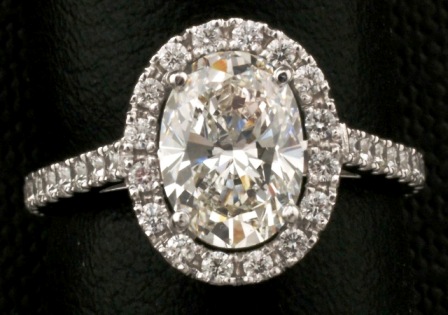
Naturally after the study of gemstones, this seems like the most appropriate topic because diamonds are the most expensive of all the gemstones. Most of its value comes from the rarity of the gemstone, but also because it is so hard. The hardness increases the optical clarity with makes it ‘sparkle’ more when cut, and it also means that few impurities will be found within the diamond itself. (Jewelry Central 2011)


A diamond ring, surrounded by smaller diamonds (Designs by Indigo 2010)

Dispersion in a Diamond (Jewellery Central 2011)

Structure of a Diamond (Jewellery Central 2011)


This is a trailer for the film 'Blood Diamond' in 2006.


Diamonds are huge in the news world, with drama surrounding the cartels in Africa, ‘Blood Diamonds’ and the sheer value and scarcity of the gemstones. I feel that diamonds are an incredibly relevant subject for state of the art media because people in the present day place much value on obtaining diamonds, and if they do they take care to show it off to people they know. Other people covet diamonds, even going as far as to steal them – in the knowledge that they will bring large sums of money at sale. Diamonds have a great power in the modern day world, blood diamonds are even used as bribes and ‘favours’ from diplomats whose countries are rich in diamonds. In 2010 the model Naomi Campbell attended a war crime tribunal at the Hague accused of accepting ‘blood diamonds’, and this was very thoroughly reported in the news at the time. (Taken from ‘Naomi Campbell's 'blood diamond' testimony at war crimes trial: live updates’ – The Guardian, Matthew Weaver 5thAugust 2010)

The Subject of Cameos

Cameos can be made from anything and everything; Hand carved shell, agate, ultrasonically carved agate, poured “agate”, coral, mother of pearl, turquoise, moulded resin, glass or painted porcelain. However, the most popular of cameos are made from shell or blue/black agate. (Espy Jewellery 2010) It is a method of carving an object such as an item of jewellery, which is the most popular form of cameo.

In modern day times they are no longer hand carved; instead they are carved with an ultrasonic mill. Occasionally an artist will also hand work a cameo to produce a portrait of someone from a photograph. (Epsy 2010)


Cameo of Sardinian conch, Ascione e Antonio Mennella  (Bellezzedinapoli 2011)
It seems as though cameos are very popular with consumers at the moment. Currently there are many shops set up online to sell these such as shops on Etsy (a website which allows people to set up their own ‘mini shop’), eBay and Amazon. There are also many websites dedicated to the making of cameos for jewellery makers, and they are increasing being seen in high street shops and in fashion.(Cameo Vintage 2011)


A cameo toy for young girls - it is a very popular format for jewellery (Hello Kitty 2011)


A video to show how to make a cameo - people are still making them as a hobby and therefore could still be viable in the present day.


After looking at different cameo sources and studying its presence in popular media, I am sceptical about its viability for the future. It looks like cameo lovers are obsessed with vintage fashion, and it seems as though there are no future advancements other than in the techniques used to create them. This might be more relevant in the history of jewellery, however if the trend carries on then it might evolve into something more modern in the future.

Ice

Dictionary Reference : Ice

ice
[ahys] verb, iced, ic·ing,
adjective
noun

1. The solid form of water, produced by freezing; frozen water.
2. The frozen surface of a body of water.
3. Any substance resembling frozen water: camphor ice.
4. A frozen dessert made of sweetened water and fruit juice.
5. British. Ice cream.

verb (used with object)

9. To cover with ice.
10. To change into ice; freeze.
11. To cool with ice, as a drink.
12. To cover (cake, sweet rolls, etc.) with icing; frost.
13. To refrigerate with ice, as air.

I decided to begin this section with the definition of ice. It is a very ambiguous subject and has many different interpretations associated with it.

Ice is water frozen into a state of solidness, which is the most common definition and the first idea that springs to mind when first considering ‘Ice’ as a topic. When looked at it appears transparent with an opaque bluish-white colour, but this all depends on the quality and purity of the air where it forms. (PRISM 2003) It can actually be likened to the ‘sparkle’ of a diamond.


This study of ice has led me onto the subject of snowflakes. From looking at the subject there seems to be much information about the topic, but not much actual media surrounding it other than the obvious global warming and ice melting issues. As I was researching, the appearance of the snowflakes intrigued me and I think these might be more popular in current media.

Snowflakes form in geometric patterns that form many, many different shapes, and there are many different types of snowflake. Most snowflakes fall in clumps to create snow, but some individual ones put underneath the microscope reveal amazing natural patterns. These snow crystals form when tiny cloud droplets super cool and freeze. (Kenneth G Libbrecht 1999)


Snowflake photo under microscope (Kenneth G Libbrecht 2008)

Snowflake photo under microscope (Kenneth G Libbrecht 2008)


The Many Different Types of Snowflake (Kenneth G Libbrecht 2008)

Looking at the current media, there are many examples of snowflakes. They are mainly examples from design, such as room and Christmas decorations and photography books looking at them under the microscope. However, the amount of products currently being sold show that there is an interest in this topic in present day media.


Treasure Trove

The first thing people think about when faced with treasure will most likely be pirates. In relation to present day media, it is practically saturated with information and examples of pirate books, movies, games, toys and many more. It seems like a really interesting subject to look into because of the massive present day interest, most likely coming from when the movie ‘Pirates of the Caribbean’ was released.

I’ll begin with a quote:  

“The image of the open treasure chest with gold and jewels spilling from inside is deeply embedded in our cultural consciousness. Very often the treasure is only found following great adventure and risk - a fitting reward for bravery and heroism” (Trevor Mendham 2007 – 2011).

This sums up the very image of the word ‘Treasure’ in popular culture. It is lusted after and dreamed about, but most people know that they will never see that kind of wealth in their lifetime. It can also make people greedy, and there has been countless story mechanics focusing on the greed treasure causes and how people react to it. In popular fiction, treasure is often guarded, with the brave adventurer having to overcome pirates, dragons or tombs to get to it. In present day real life, treasure is often found buried in fields, in old burial sites and under the sea in shipwrecks. (Jonathon Franklin '600 barrels of loot found on a desert island' 2005) (Andrew Davies Rooting Around 2011)


From looking at treasure, the most relevant description is probably buried treasure, as there are many examples of this in news stories and websites dedicated to chronicling what has been found. (see below) One of the most recent examples of this was the horde of buried coins found in a Somerset field in 2010. There has been so much interest in these that they are now in a museum in Somerset for everyone to look at. In my opinion, this idea of treasure is still relevant today, but in a historical sense. Uncovering buried treasure is happening now – but the treasure is from as far back as AD286 so this could be more historical than state of the art.


After reading up more on ‘treasure’ I came across a very useful fact box on the BBC article about the coins:

WHAT IS TREASURE TROVE?

Where the owner of a find cannot be traced, it normally belongs to the landowner but anything declared "treasure" belongs to the Crown
Anyone making find that could be treasure must report it to a coroner
An inquest will then determine its status
Treasure must be at least 300 years old
Once something is declared treasure, the finder may be able to keep it, or an institution, such as the British Museum, may buy it
Objects are not treasure if their owners can be traced or if they are found on the shore but do not come from a shipwreck

This topic even proved so popular that the BBC television program ‘Digging for Britain’ featured it on the show. (BBC 2010) (360 production2010)

Pearls

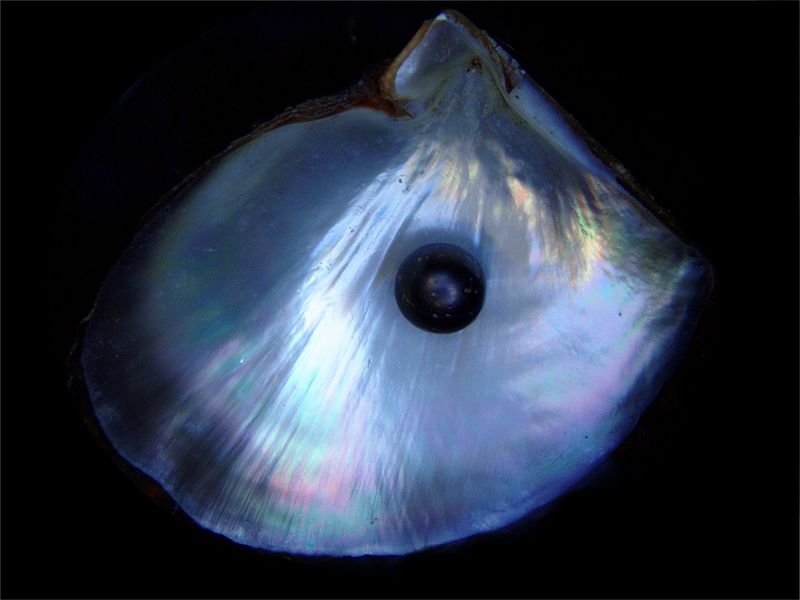
Pearls grow naturally in the wild, forming when a grain of sand gets trapped inside an oyster or mussel. The shellfish coats the offending grain in a layer of a substance called ‘mother of pearl’ until the pearl as we know it is formed. (Pearls Only 2011) This process usually takes a number of years, and the unpredictableness of the pearl formation means that before pearls could be cultivated they were very rare and expensive. The word pearl has actually become a metaphor for something to be perceived as very rare, admirable, valuable and fine. (Pearl Guide 2011)


A ‘Cultured Pearl’ is the name given to those pearls which are grown with human intervention. This is a very state of the art way of producing pearls, because in the past people would have had to dive for the pearls in dangerous conditions, without any breathing apparatus. Now all they need to do is place the oysters in shallow beds and go round and harvest them once the pearls grow inside them. This is a modern solution to the problem – only possible with modern discoveries and technology. (The Cultured Preal 2011) (Pearl Guide 2011)


In my opinion it seems as though pearls have always been coveted by people, but like with diamonds, modern techniques are making them more accessible to the common market. I was reading an article from The Wall Street Journal about pearls, “The rare golden Palawan South Sea pearls it sells are plenty cool for tough guys — and it launched a new men’s line last year to prove it, employing actor Piolo Pascual for the ad campaign”. (Josephine Cuneta, 22nd November 2011). This made me realise that pearls are still viable in today’s market due to the state of the art way of making them and they still appeal to popular media in present day.

Conclusion
On completion of this present section for the topic of ‘Jewels’ I have come to the conclusion that the popularity of the subject makes it a viable research topic. I think that the subject areas of diamonds and pearls will continue to be popular in the future, but I am not too sure about the subjects of treasure and cameos. These have both been popular in the present day, but the popularity of these comes from the antiques being sold – so maybe I will discover what made them popular in the past, and why these antiques and their imitations (for cameos) are so popular in the present day. My research into jewels in the present day has determined that it is prominent in the media of today, and a popular topic in today’s society, I will now look into the past and horizon to see if this popularity has continued, or changed.