Monday, 6 February 2012

15. Overview of Future Technology

Facebook is currently the largest and most popular social networking site currently, according to techcrunchin the solar system of social media, Facebook is the Sun — the gravitational centre around which everything social revolves (TechCrunch 2012). However, this could change in the future. 


Consumers are now adopting smaller, more specialised start up social networks. Smartphone and computer apps such as Pinterest, Instagram, Thumb and Foodspotting are creating social networks for smaller, niche topics. This could mean that a small social network could be developed for people who are conscious about world issues and the environment, or people who like reading the news. This would mean that the game could be features on a site like this and appeal to more people.
Another future innovation would be Google’s ‘Project Glass’.  Their glasses present a way to produce ‘augmented reality’ and are very easily tied into social networking, such as by displaying chats between your friends and you, and enabling you to share photos as you go about your day. (The Guardian, 2012)
This could be a very good opportunity for the game because it could run on these glasses through a connected social network. This would mean that the player could look at objects through the game, and play through some real life scenarios. It could also suggest ways of reducing their carbon emissions as they go about day to day activities.

14. Marketing

This game will be very easy to market to an audience who are conscious about the environment and climate change. With the topic being so popular currently, it is getting a large amount of media attention and so hopefully this will help to market the game itself.

A perfect way to market this game would be to use ‘sustainable marketing’, because this ties in with the theme of the game. This means using recycled materials wherever possible, and using alternative energy resources during production of the final product. (Sustainable Marketing, 2012)

This game would also be a good game to play in schools, to teach children about climate change. A separate stand-alone game could be made so that it can be used in schools without them having to use a social network.
The game could also be marketed using grants or features from different companies and charities which focus on climate change. Charities such as ‘Stop Climate Chaos Coalition’ and ‘Friends of the Earth’ might be very interested in the idea of a game promoting climate change education, and so they may feature it on their websites, or recommend it to their members. They may even sponsor the game to have their logos put onto it, and to claim some of the profits of the game as donations to their causes. (SCCC 2012) (Friends of the Earth 2012)

One of the biggest ways of marketing this game would be on the social networking site that it is hosted on. The game will have access to its player’s list of friends, and it can send out invitations to play through this. It can also be promoted by asking if the player wants to ‘share’ their achievements with their social networking friends, with a link to the game so that more people will play. A final way of marketing this game would be the option to earn in game rewards by recruiting friends. The player will have the option to invite their friends to the game. The more of their friends who join the game, the more rewards the player will get.


(Stop Climate Change Coalition, 2012)

(Friends of the Earth, 2012)


How ‘Castleville’ by Zynga markets via social networking (Facebook 2012)


The game’s release could be timed to coincide with a major climate change event. The United Nations hold a Climate Change conference every year, with a different country hosting it every year. The game could be released alongside the conference, so that the game will complement the media stories about the event. Last year the conference discussed ways of limiting carbon emissions, and agreed that the strategy was going to be finalised and released in 2015 - for it to be taken into effect by 2020 (The Guardian, 2011). If the game is released alongside the carbon emissions plan, it can help people to understand why we need this plan, and it will teach them how to reduce their own carbon emissions.

There are other significant days in the year where the game can be released, such as; Climate Week (12th to 18th March), Earth Day (22nd April), World Environment Day (5th June), World Oceans Day (8th June) and Global Wind Day (15th June). All of these days can be used to draw attention to the game, because the game contains enough relevant content to link to all these days. 

Climate Change Conference Logo (United Nations, 2012)

World Environment Day Logo (United Nations, 2012)


13. Unique Selling Points and Exciting Game Play Features

I had to change the Unique Selling Points and Game Play Features Section to a more concise, bullet pointed version. It was pointed out in a feedback session that this section should not be wordy, and it should be more straight to the point - so I changed it accordingly.

·         Advertising climate change

·         It is a trending topic in the media currently

·         Raises money for charities

·         Will appeal to people’s good ethics

·         Unique art style

·         Fully customisable main area will let people tailor their game

·         The first game to integrate News and RSS feeds, letting the player respond to current events as they happen

·         The game will have regular updates to keep it relevant


Artwork from the game

(old version)


 This game will advertise climate change and natural disasters. It is a really popular topic in the media currently, and climate change has the potential to affect everyone in the world at some point.


The idea of raising money for charities that help out with the aftermath of natural disasters, such as the Red Cross, will appeal to people and the ethical concept may persuade more people to play a game that they might not have considered playing before.

Combining this idea with a unique art style and a fully customisable main area will greatly appeal to the public who use games on social networks. the customisable aspect of the game lets them create themselves within the game, in their own special area - which will be different from anybody else's in the game.

This game is the first game to integrate news feeds and RSS feeds into a game, which then lets the players directly respond to current events and it lets them feel like they are taking part in the cause, rather than just watching from a distance.

12. Game Mechanics

In the laboratory:

1. The player must use the laboratory machines to conduct experiments. This will unlock new machinery and options for solving natural disaster problems.

2. The player will use the digital world map (purchasable from the supplier store) to move between the different levels of the game.

3. The player can use the supplier store to purchase upgrades for the in game items in order to improve the game experience and progress through the game.

Using the Laboratory to experiment

Using the Digital World Map to navigate


The Natural Disaster Levels:

4. During the natural disaster levels, the player will be able to interact with the surrounding objects to produce a positive outcome.

5. The player will be able to interact with people in these levels and use a multiple choice option to persuade them to help stop climate change.

6. There will be certain collectibles that will help the player to complete challenges once the entire collection is complete. They can use social networks for this and ask their friends to gift certain items to them to help complete these collections.

Multiple Choice Menu


11. Settings and Scenarios

The game is set in the player's laboratory which will be in a cell shaded, 2D Isometric style. The laboratory will be fully customisable using a special supplier that the player will have access to, and they can spend their in game money on new machinery, different coloured machinery, coloured floor tiles and wall paint, and several themed decorations. This will also encourage players to buy in game money using real money, because they will be able to have access to better and more efficient items.


Screenshot of the player's Laboratory
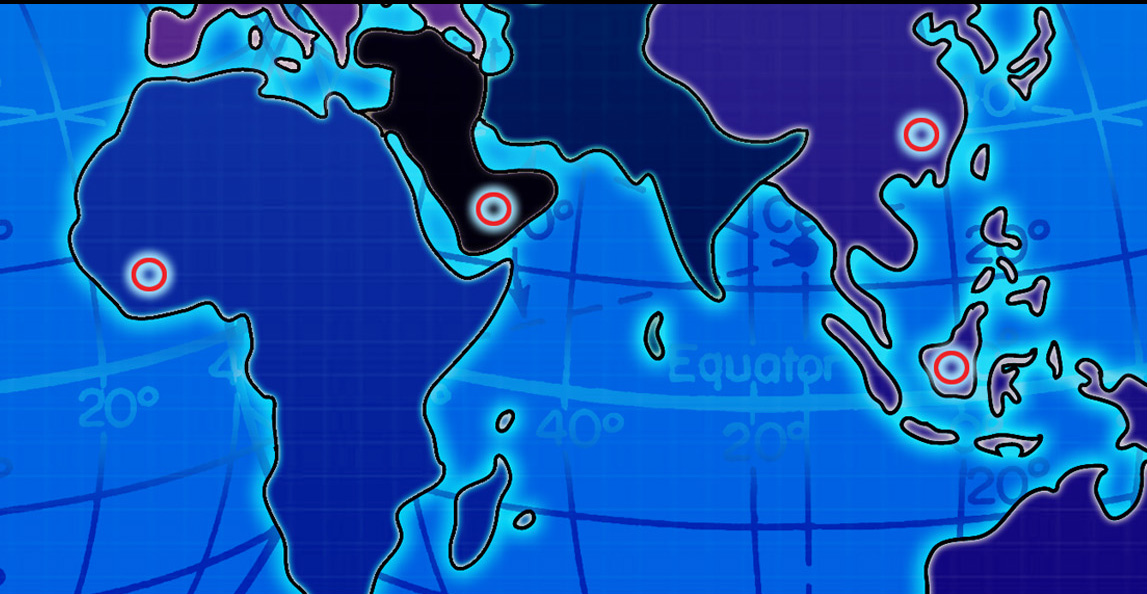
Using the digital world map screen, the player will be able to select which location to go to and will be instantly transported there.

World Map Screen

The different scenes within the world will be a different style from the laboratory to differentiate between the different locations. They will consist of a static scene that the player can walk around within a limited space. They can click on different objects and features to pull up interactivity options and information. There will also be people in these levels that the player can talk to and try and convince them to change to a non carbon based energy source. Eg: a school on a tropical island could have a solar panel to provide electricity, because it is in a very sunny place. 

A Disaster Scene where the player can visit and interact with the objects there

10. Non Player Characters


Name: Maximilian Gove

Role: Antagonist

Description: An adult male in a sharp suit, who looks rather suspicious. He has slicked back hair and a sly attitude; he is used to getting his own way and doing what he wants. He is a government official who is making a lot of money by accepting bribes from companies who are polluting more than they should be. Because of the new climate change plans proposed by the protagonist, Max is very upset that he can’t take any more bribes… And in turn the companies are very upset that they cannot get away with as much as they had before (which is very bad for business).

Max will try and thwart the attempts of the protagonist at every step of the way because it is in his best interests to get the protagonist’s operation shut down.


Name: (group) The United Nations

Role: International Peace and Security

Description: The United Nations was formed after the Second World War and there are currently 51 countries represented by it. In their charter they state that they are committed to "maintaining international peace and security, developing friendly relations among nations and promoting social progress, better living standards and human rights." (United Nations, 2012)
Within this game they will be responsible for humanitarian efforts in the aftermath of natural disasters, and they will meet and discuss upcoming threats so that the player can act and respond to them.


Name: Country Residents

Role: Supporting Characters

Description: At each location, there will be people who need the help of the main character. They will have appropriate looks and nationalities to fit in with their home country (for example, the player will talk to a Japanese person if they are investigating the Japanese earthquake in Japan). 


These characters will want advice from the main character so that they can help make the world a better place and stop the natural disasters from happening. They also need advice about how climate change is affecting the world, and the direct consequences their actions are causing when they ignore the issue.


9. Main Character

The main character is the player. They play as a scientist whose speciality is climate change and the ecosystem.

The player will give their main character a nickname, or they can choose to use their name from their social networking profile. 

Name: Male Scientist/ or Female Scientist
Role: Main protagonist
Personality: Hopefully the player will project their own personality onto the protagonist as they play, but the default personality is that of a helpful person who cares about other people, and they want to use their skills and knowledge for the good of the world.


Every character will be a human adult wearing a lab coat. 
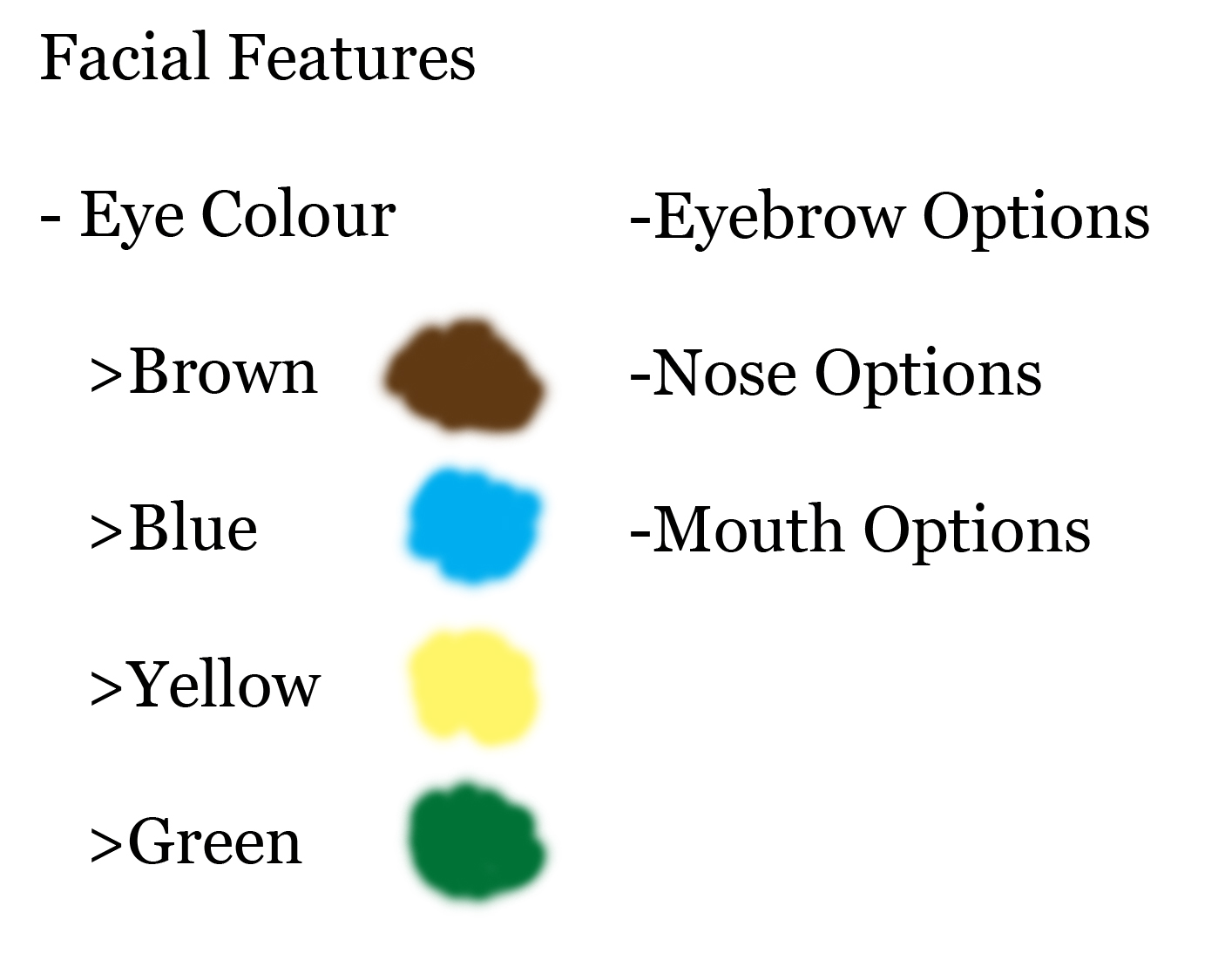
There will be several different customisation options to choose from.


The ability to customise their character is intended to make people associate more with the game. If they can play as themselves in the game, they will have a higher emotional stake in how well or often they play the game. The social networking capabilities also allow players to compete with their friends.


Customisation Options

Here are some examples of my initial development work to decide on the customisation options for the main character: